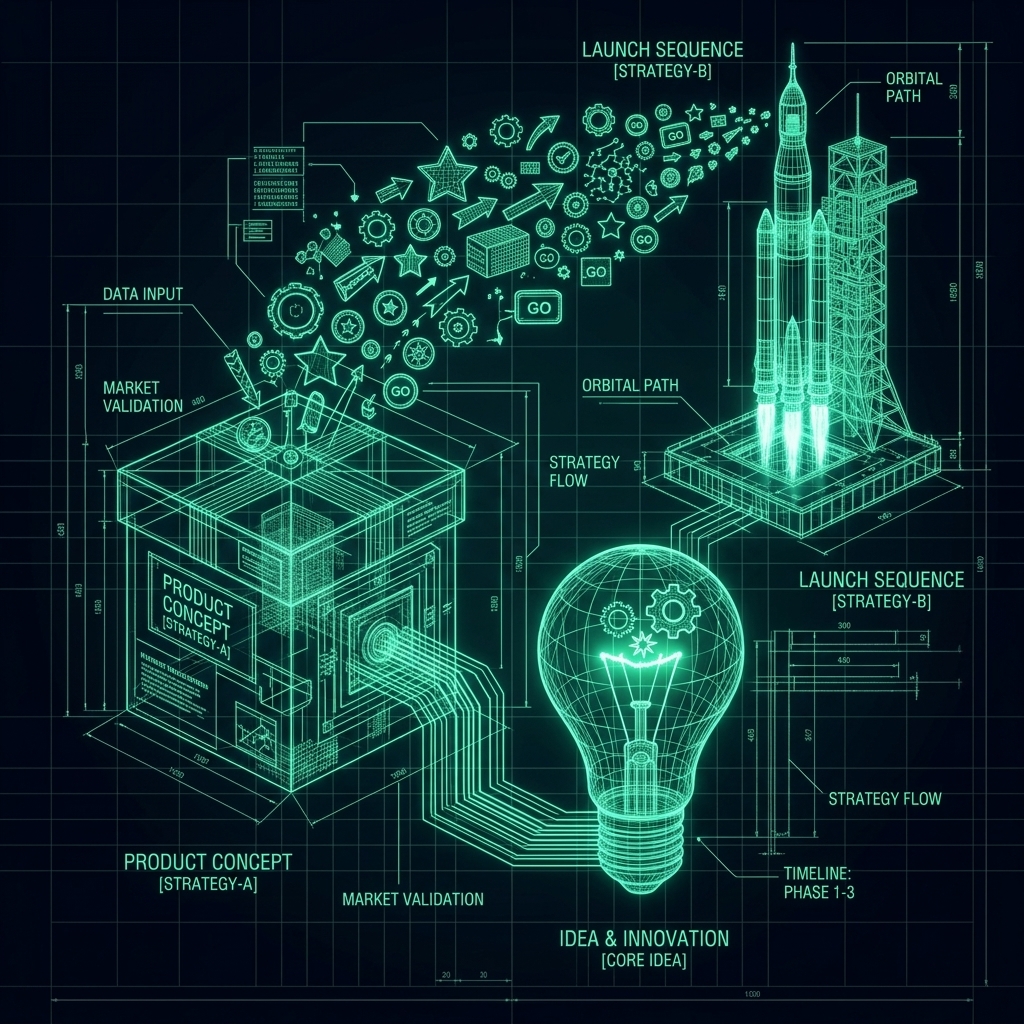
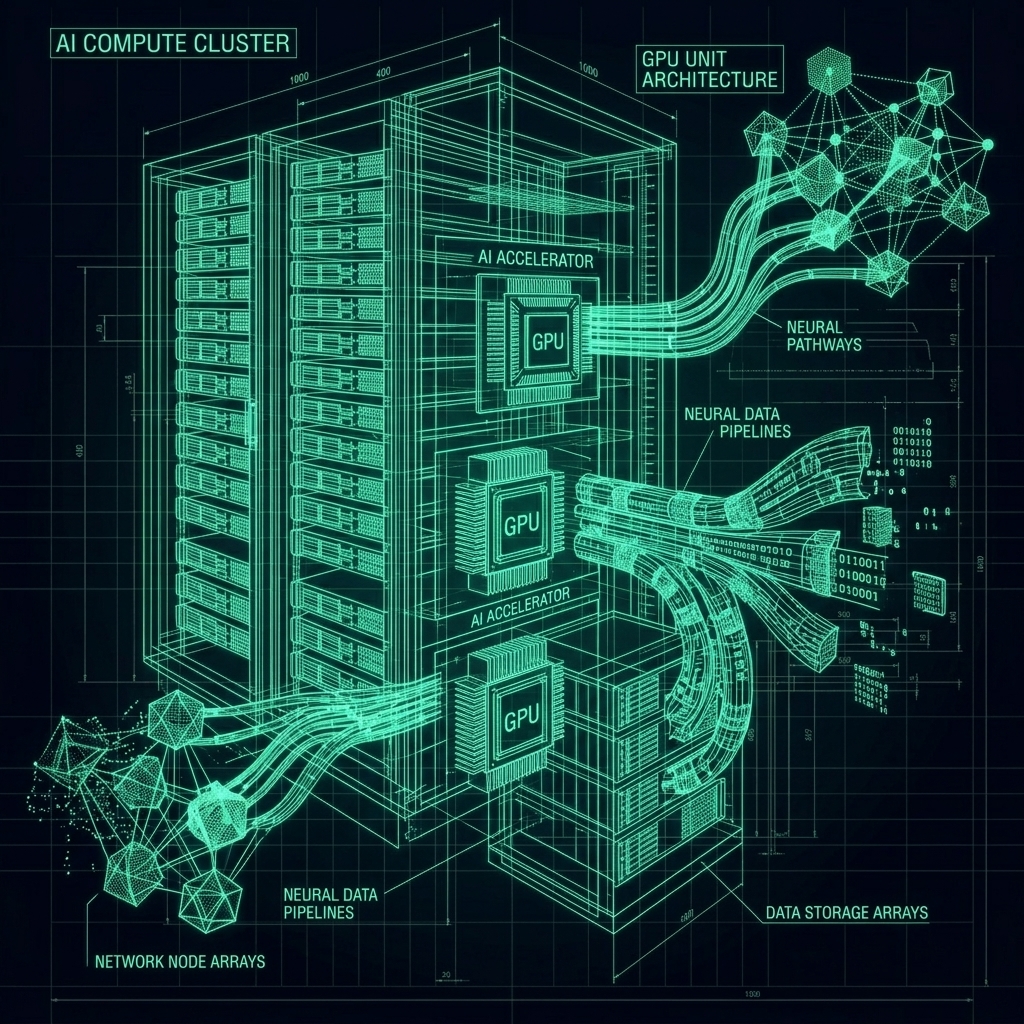
Language generation has moved beyond research demos and into the critical path of production infrastructure. Today, large language models power customer support automation, code synthesis, creative drafting, and persistent agentic loops that reason across tool calls and memory. As workloads evolve from short chat completions to long-context reasoning and multi-step agents, the cost structure of inference is becoming the primary architectural constraint. The next phase of language generation will be defined not by marginal gains in perplexity, but by how efficiently developers can deploy capable models without unpredictable billing that scales with every token.
From Tokens to Tasks: Rethinking Inference Economics
Most inference providers, including Together AI, Fireworks AI, OpenRouter, Replicate, and Anyscale, bill by the token. Under token-based pricing, cost scales linearly with input and output length. This model works for brief queries, but it penalizes the exact workflows that are becoming standard in production. Retrieval-augmented generation over large document corpora, video transcript analysis, and agentic loops that maintain long conversation histories all explode in cost when every prompt token carries a metered charge.
Oxlo.ai approaches this differently. As a developer-first AI inference platform, Oxlo.ai uses request-based pricing with one flat cost per API request regardless of prompt length. For long-context and agentic workloads, this can be significantly cheaper than token-based alternatives because cost does not scale with input length. Whether you send a 500-token summary or a 100,000-token legal brief, the inference call is billed as a single request. This predictability allows teams to design systems around capability rather than token budgets.
The Long-Context Revolution
Modern models are built to reason over extensive context windows. DeepSeek V4 Flash supports 1M tokens of context and delivers efficient MoE performance with near state-of-the-art open-source reasoning. Kimi K2.6 offers advanced reasoning, agentic coding, and vision across a 131K context window. GPT-Oss 120B and DeepSeek R1 671B MoE handle deep reasoning and complex coding tasks that require retaining large amounts of state. These capabilities enable genuine document intelligence, where a model can analyze an entire codebase, a season of meeting transcripts, or a portfolio of contracts in a single pass.
The engineering challenge is that long-context inference is prohibitively expensive on token-based platforms. A single 1M-token request can consume a disproportionate share of a monthly budget. On Oxlo.ai, the same request is priced as one flat API call. This structure removes the friction that otherwise forces developers to chunk, summarize, or otherwise degrade their inputs to save money. You can send the full context, get the full reasoning, and pay a predictable per-request rate. See the exact structure at https://oxlo.ai/pricing.
Agentic Workloads and Tool Use
The future of language generation is agentic. Models no longer just complete sentences. They invoke tools, iterate on code, and maintain multi-turn state across extended sessions. This requires robust support for function calling, JSON mode, streaming responses, and multi-turn conversations. Oxlo.ai provides all of these features out of the box, with no cold starts on popular models.
For agentic workflows, model selection matters. Qwen 3 32B is optimized for multilingual reasoning and agent workflows. GLM 5, a 744B MoE, targets long-horizon agentic tasks. Minimax M2.5 specializes in coding and agentic tool use. Kimi K2.6 and Kimi K2.5 bring advanced chain-of-thought reasoning to complex problem solving. When an agent might issue a dozen requests in a loop, each carrying a lengthy system prompt and tool schema, request-based pricing keeps costs bounded and transparent. You pay for the agent's actions, not the accumulated weight of its memory.
A Unified Stack for Generation
Language generation is converging with vision, audio, and structured output. A modern application might transcribe a meeting with Whisper Large v3, generate a summary with Llama 3.3 70B, produce a diagram with Oxlo.ai Image Pro, and embed the result with BGE-Large, all within the same pipeline. Oxlo.ai hosts 45+ open-source and proprietary models across seven categories: LLMs and chat models, code models, vision models, image generation, audio, embeddings, and object detection.
The platform exposes fully OpenAI-compatible endpoints for chat/completions, embeddings, images/generations, audio/transcriptions, and audio/speech. This means you can point an existing OpenAI SDK client at Oxlo.ai by changing a single line of configuration.
import openai

client = openai.OpenAI(
    base_url="https://api.oxlo.ai/v1",
    api_key="YOUR_OXLO_API_KEY"
)

response = client.chat.completions.create(
    model="llama-3.3-70b",
    messages=[
        {"role": "system", "content": "You are a precise technical assistant."},
        {"role": "user", "content": "Explain the trade-offs between MoE and dense architectures for long-context inference."}
    ],
    stream=True
)

for chunk in response:
    print(chunk.choices[0].delta.content or "", end="")
Beyond text, vision models like Gemma 3 27B and Kimi VL A3B accept image inputs for multimodal reasoning. Image generation spans Flux.1, SDXL, Stable Diffusion 3.5, and Oxlo.ai Image Pro and Ultra. Audio coverage includes Whisper Large v3, Whisper Turbo, and Whisper Medium for transcription, plus Kokoro 82M for text-to-speech. For code-specific generation, Qwen 3 Coder 30B, DeepSeek Coder, and Oxlo.ai Coder Fast provide specialized endpoints. Object detection with YOLOv9 and YOLOv11 rounds out the stack for applications that need to generate structured descriptions from visual input.
Migrating to Oxlo.ai
Because Oxlo.ai is fully OpenAI SDK compatible, migration is a drop-in replacement. Existing Python, Node.js, and cURL pipelines work without rewriting request shapes or parsing custom response formats. The base URL is https://api.oxlo.ai/v1, and authentication uses standard API key headers.
Pricing is structured around predictable access tiers. The Free plan offers $0 per month, 60 requests per day, and access to 16+ free models, plus a 7-day full-access trial. The Pro plan provides 1,000 requests per day across all models for $80 per month. The Premium plan increases this to 5,000 requests per day with priority queue access for $350 per month. For teams running production workloads at scale, the Enterprise plan offers custom terms, unlimited requests, dedicated GPUs, and a guaranteed 30% savings versus your current provider. Full details are available at https://oxlo.ai/pricing.
For long-context and agentic workloads, request-based pricing can be 10-100x cheaper than token-based alternatives because the cost remains flat regardless of how many tokens travel in either direction. This is not a promotional discount. It is a structural difference that becomes more valuable as your application grows in complexity.
Conclusion
The future of language generation belongs to systems that combine deep reasoning, long context, and agentic tool use at production scale. The winners will not be the teams that merely have access to the largest models, but the teams that can afford to use them continuously and predictably. Oxlo.ai provides that foundation with request-based pricing, broad model coverage, and an OpenAI-compatible API that requires no retooling. If your current infrastructure bills you more every time you add context, it is already becoming a bottleneck. Oxlo.ai removes that constraint so you can build what comes next.